

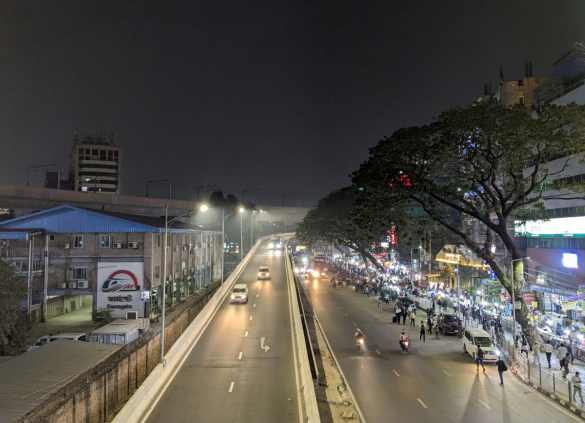
Discover how the Dhaka Expressway project is reshaping Bangladesh’s capital, favoring private vehicles over mass transit, and impacting the environment.
The Reality Behind the Dhaka Expressway project
In the heart of Bangladesh’s bustling megacity, the Dhaka Expressway project was initially hailed as a much-needed remedy for crippling traffic. With core densities exceeding 40,000 inhabitants per square kilometer, Dhaka has historically struggled with limited road space. However, recent urban development trends and operational data reveal a stark contrast between expectation and reality. Rather than serving the masses, this massive capital-intensive infrastructure heavily favors the wealthy, placing immense pressure on the city’s resources while sidelining crucial mobility initiatives.
Prioritizing Cars Over Mass Transit
Operational data from recent years indicates a troubling trend: over 98% of the vehicles utilizing the elevated toll road are private cars. Because the elevated deck lacks intermediate stops, it offers almost no benefit to regular commuters who rely on buses. For those interested in deeper insights into the automotive landscape, vehicle safety, and modern driving trends, you can explore GarirNews for reliable information.
Instead of solving congestion, the Dhaka Expressway project merely shifts gridlock from one area to another. High-speed traffic exiting the ramps dumps vehicles into already saturated intersections like Farmgate and Mohakhali, creating intense shockwaves of traffic. Furthermore, initial plans for the expressway to facilitate freight movement have largely failed. High toll costs keep commercial trucks away from the overhead routes, pushing logistics companies to travel late at night instead.
Hampering National Railway Growth
Perhaps the most damaging technical flaw of the Dhaka Expressway project is its severe conflict with the national railway’s right-of-way. By placing massive concrete piers directly on Bangladesh Railway land, the expressway has severely obstructed vital rail expansion. The planned 3rd and 4th dual-gauge lines for the critical Dhaka-Tongi-Joydebpur corridor have faced massive land-acquisition hurdles, pushing completion timelines well beyond 2027. This misalignment essentially destroys opportunities for vertical rail growth, which is a standard requirement for sustainable transport in modern cities.
Environmental Costs and Financial Delays
The environmental toll of the Dhaka Expressway project has been devastating. To accommodate ramps and pillars, significant ecological damage has occurred, including the felling of thousands of trees at Panthakunja Park and the disruption of the Hatirjheel waterbody. Despite legal stays and protests by environmentalists, construction has controversially continued. Financially, the initiative also faced a massive 18-month suspension due to contractor disputes, only recently resuming full-scale operations under new management with an extended completion target set for late 2026.
A Lesson from Jakarta
When comparing Dhaka’s approach to other capitals, the planning flaws become even more apparent. Jakarta, under similar pressure, pivoted away from inner-city toll roads to focus on a seamlessly integrated public transit network. Their Jak Lingko system brilliantly links micro-buses, BRT, and MRT, prioritizing the movement of people rather than vehicles. In stark contrast, Dhaka’s lack of integration forces an isolated transport scheme that ultimately harms the masses.
What are your thoughts on the ongoing Dhaka Expressway project? Do you think it effectively serves the everyday commuter, or is it just a massive concrete burden on the city?
Drop your opinions, concerns, and daily commuting experiences in the comments below!